
There is something about encountering the evidence of a life abruptly interrupted that can take your breath away. You may not understand it until you find yourself standing in the midst of what someone has left behind.
Imagine yourself standing at the door of your childhood home. Your mother died a decade ago. Just hours earlier, you received a call from the emergency room. Your father had been rushed to the hospital after suffering a heart attack. The doctor told you he had died. As you stand there, doorknob in hand, you wonder, what was your father doing when his heart failed him? What normalcy of life was happening before everything stopped being normal? You walk in to find a half cup of coffee, unfinished and cold on his desk, next to his checkbook and what looks like some unpaid bills. Dishes from last night soaking in the sink. Dirty boot prints from the paramedics muddy the carpet and the lamp is knocked over near the couch.
You stand there, where time is stilled, understanding that you do not have the luxury of time standing still. You have information to find. You know your parents had a will; they told you where it was, but that was years ago; how could you possibly be expected to remember that now? And did they say they wanted to be cremated and buried, but not embalmed? The funeral home director is asking about that, too. You sigh as you consider your siblings and the things you fear coming to pass. You consider securing the safe, just in case your brother tries to burn through whatever is left of your parents’ hard-earned retirement savings. There was never much to begin with, but surely there is enough to give your father the farewell he deserves. Your mind wanders to your mother’s beloved recipe box. Your sister has been saying recently that Mom wanted her to have it, but she already has so many of Mom's things. Is it fair that you get just the one thing, especially if you are the one left to carry all the responsibilities?
Grief has barely had time to arrive before responsibility begins demanding attention.
This is just the beginning of what could be years’ worth of disagreements and battles over things, intent, and legacy. The way we plan (or don’t plan) today will have long-standing and far-reaching consequences for those we leave behind. The way we prepare today can influence what others will be asked to carry tomorrow.
We may not be able to be there with them, but that does not mean we have to leave them to carry the burden alone.
Some people don’t plan because it feels like a weight to do so. Plans done well include conversations, and not everyone is eager to have them. Many people mistake avoiding these conversations as protecting others. Sometimes we avoid them because we’re afraid ourselves. Often, it’s a little bit of both. Neither makes us bad people. Silence doesn’t protect anyone from what eventually must be faced. And when we do not plan, the unfinished business of our lives still needs to be addressed. The accounts, the utilities, the house full of stuff and unfinished tasks all still need to be finished. And those we leave behind are tasked with the finishing, while trying to grieve.
Preparing helps lessen the load carried by those you love. It provides a way to leave detailed instructions, beyond just a will, of where to find the important documents, how to access the important accounts, what you want to happen to grandma’s cherished quilt, and what you value most about those around you. It allows you to leave a roadmap during what might be your loved ones’ darkest and most difficult times.
Preparation cannot remove every burden, but it can lessen the weight of what others will be asked to carry.
How we each prepare is different. For some of us, it means ensuring all the life insurance and funeral home paperwork is in order, all the account numbers are organized and the passwords available in a secure location. For others, it means handing off our prized possessions long before we die. But preparation isn't only about documents and decisions. It's also about the stories we carry, the experiences that shape us, and the things that come to hold meaning in our lives. These, too, deserve our attention.
For some, preparing looks like carrying on a well-worn habit, shared between generations, like picking up stones from memorable places or from a location where a particularly important event occurred. I carry on that tradition from my mother and her father before her. Part of my preparation means holding on to a small collection of stones I gathered along the shore when I finally said my farewell to my sister, Sarri, many years after her death. I call them my Sarri Stones. These stones have traveled with me from state to state, home to home, across the years. And now, one of those stones has a life all its own, a story and a legacy imbued through life, loss, and grief. It has been lovingly wire-wrapped into a pendant that hangs around my neck. Perhaps one day I will pass it on to her granddaughter. Inherited objects like that tell stories that might otherwise be forgotten or unknown.
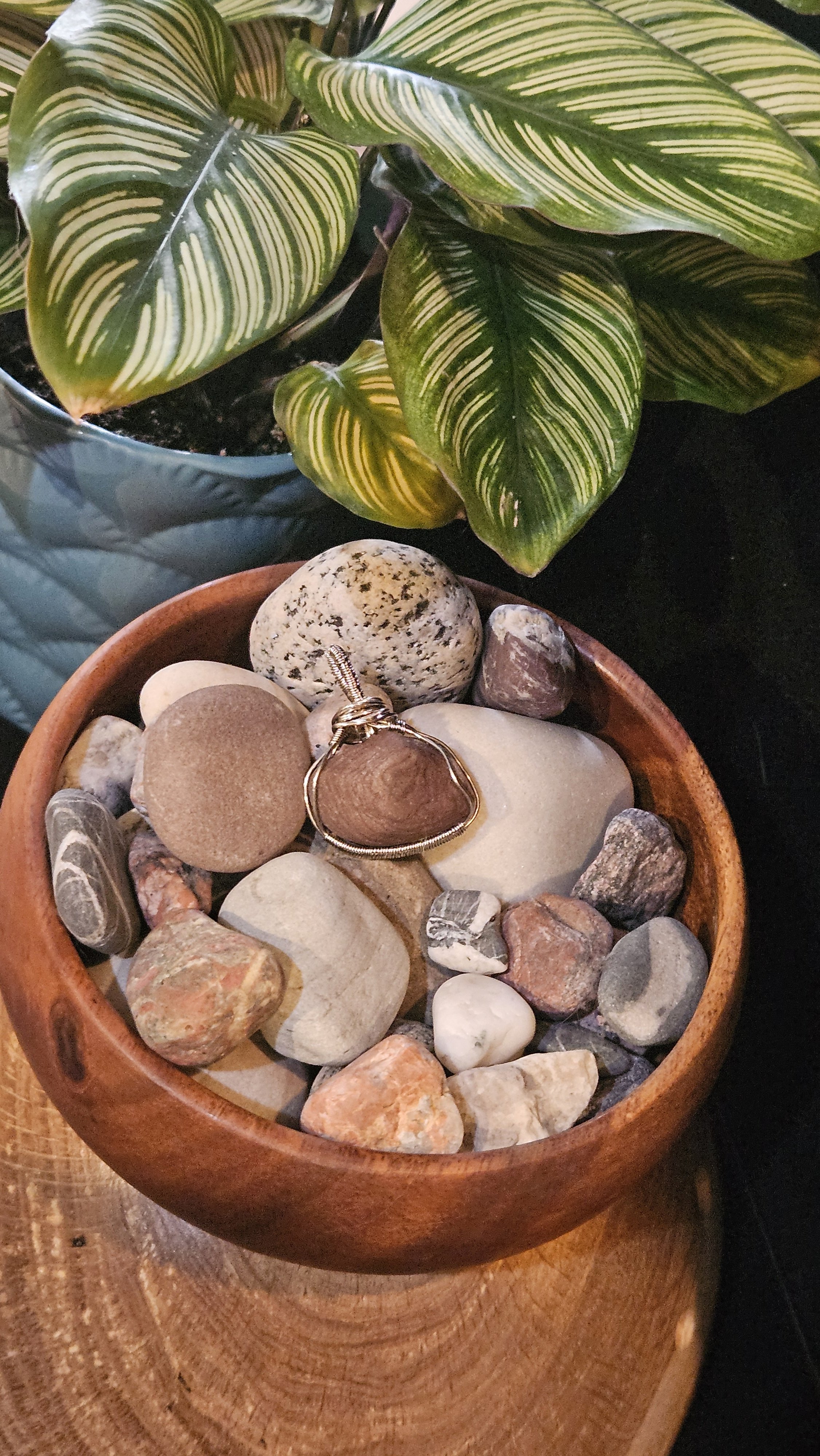
The Sarri Stones, collected in remembrance of my sister. One has been transformed into a pendant, carrying her memory forward
Sometimes love looks like the completion of paperwork. Sometimes it looks like sitting with someone who is deep in grief, making space for all the pain, whether new or two and a half decades old. And sometimes it looks like telling a story through the preservation of an object, creating something new and meaningful from what remains.
My own experiences with loss, grief, and the responsibilities that follow have shaped the work I do today. I believe we have an opportunity to care for one another through preparation, through the difficult work of grief, and through the preservation of the stories and things that matter. In each of these, there is an expression of love.
Legacy Woven isn't just about preparing for death. It's about how we care for one another before death, through loss, and in the lives that continue afterward.
From what’s left to what matters.
